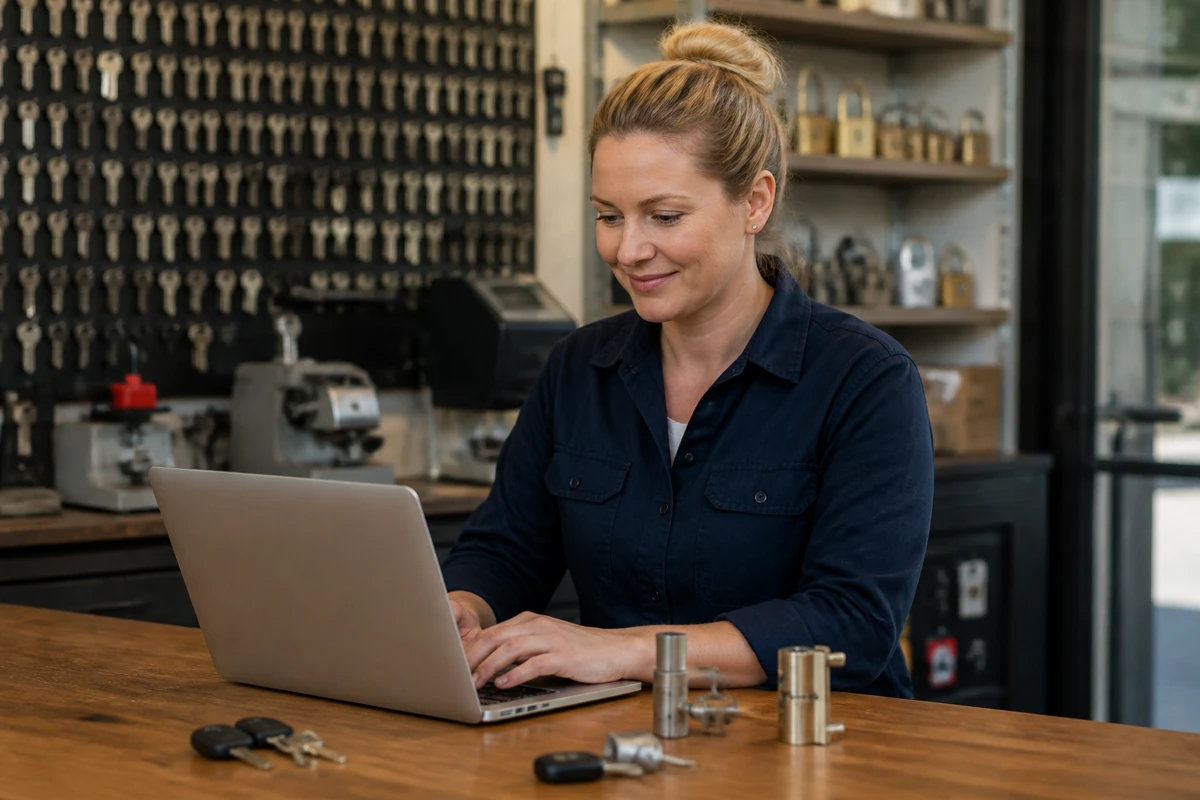
How Locksmiths Can Build Trust Before a Customer Calls
When someone needs a locksmith, trust matters fast.
Sometimes it is an emergency. A customer is locked out, standing beside their car, worrying about time, cost and whether they are calling the right person. Other times, the job is less urgent, like replacing old locks after moving house or upgrading security for a shopfront. In both situations, people want reassurance before they pick up the phone.
That means your website has an important job to do. It is not just there to list services. It should reduce doubt, answer common questions and help people feel safe about contacting you.
For locksmiths, trust is often the difference between getting the call and being skipped for the next business in the search results.
If you are thinking about how your site supports leads more broadly, it also helps to understand how your online presence can better support locksmith enquiries without relying on hard-sell messaging.
Why trust needs to be built before contact
Most customers do not know much about locksmithing.
They may not understand what is involved in rekeying, what a master key system does, or why one lock replacement costs more than another. That knowledge gap creates uncertainty. And uncertainty can stop people from calling.
There is also a second issue. Locksmithing is a trust-sensitive service. You work with access, security, homes, vehicles and businesses. Customers are naturally cautious about who they let into that part of their lives.
Before they call, they are often asking themselves questions like:
- Is this business legitimate?
- Do they actually do this type of job?
- Will they explain the problem properly?
- Are they local enough to respond quickly?
- Will I get hit with a surprise bill?
Your website should answer these questions clearly and calmly.
Not with hype. Not with exaggerated claims. Just with useful information presented in a way that feels professional and reliable.
Make it obvious what you actually do
One of the quickest ways to lose trust is being vague.
If a customer lands on your site and cannot tell whether you help with house lockouts, car key issues, commercial lock fitting or after-hours calls, they may leave without contacting you.
Be specific about your services.
That does not mean cramming every possible phrase into one page. It means explaining your work in language real customers understand.
For example, instead of simply saying “we offer complete lock solutions”, you can break that into practical service areas such as:
- home lockouts
- lock repairs and replacements
- rekeying after moving house
- deadbolt installation
- car key replacement or lock access
- commercial lock systems
- restricted key setups
- after-hours emergency attendance
This helps customers quickly identify whether they are in the right place.
It also reduces the chance of irrelevant calls, which saves time for your business and makes your website work harder.
If your business handles both household and business security work, keeping those topics clearly separated is especially important. A customer needing a home lock changed wants different information from a facilities manager comparing access options. That is one reason why residential and commercial locksmith pages should be separate is worth understanding when planning your site structure.
Show the person behind the business
Customers are often more comfortable calling a locksmith when they can see there is a real person or team behind the business.
An anonymous website can feel risky, especially in an industry where trust and access go hand in hand.
You do not need to overdo it. A clear About page, a short business story and a few genuine details can go a long way.
Useful trust-building details might include:
- how long the business has been operating
- the types of jobs you regularly handle
- whether you are owner-operated or have a small team
- what areas you service
- your approach to quoting and customer communication
If you have a workshop, mobile service vehicles or a physical service area, mention that clearly. These details make your business feel established and real.
Even small touches matter. A professional photo of the owner or team, plain-English descriptions and up-to-date contact details all help reduce hesitation.
Use service pages to answer concerns, not just list tasks
A common mistake on locksmith websites is treating service pages like a checklist.
Customers do not only want to know what you do. They want to know what the experience will be like.
That means each service page should do more than name the service. It should help the customer feel informed and comfortable.
For example, on a lockout page, you might explain:
- what information a customer should have ready when they call
- the types of lockouts you assist with
- whether proof of occupancy or ownership may be required
- what affects response times
- what happens if a lock is damaged or needs replacement
On a lock replacement page, you might explain:
- when replacement is better than repair
- common reasons customers replace locks
- the difference between rekeying and full replacement
- whether matching multiple locks is possible
This style of content builds trust because it feels transparent. It shows you understand the customer’s concerns and are willing to explain things properly.
Be clear about service areas and availability
Local trust often comes down to practical details.
If a customer is locked out or dealing with a security problem, they need confidence that you actually service their area. If your site is unclear, they may move on.
List your service areas in a sensible way. If you work across a metro region, say so. If you only cover selected suburbs or towns, make that easy to find.
Availability also matters.
If you provide emergency attendance, after-hours support or weekend help, explain what that means. Do not make broad promises unless they are accurate. Customers appreciate honesty more than dramatic wording.
For example, “after-hours emergency attendance available in selected service areas” is clearer and more trustworthy than making huge claims that may not apply to every job.
Likewise, if some services are by appointment only, say that. Transparency reduces friction and avoids disappointment.
Answer pricing questions without forcing fixed quotes
One of the biggest trust barriers in locksmithing is fear around cost.
People worry about hidden fees, inflated emergency callout charges or being told one thing on the phone and another on site.
You do not need to publish exact pricing for every service if that is not realistic. But you should still address the subject.
You can build trust by explaining:
- what factors affect pricing
- whether callout fees apply
- how emergency work differs from booked jobs
- whether hardware quality changes the cost
- when you can provide an estimate and when an on-site inspection is needed
This approach helps customers feel informed without boxing your business into unsuitable fixed prices.
It also shows you are not avoiding the topic.
Even a simple statement like “pricing depends on the lock type, time of day and whether replacement parts are required” can make a customer feel more prepared.
Use reviews and proof carefully
Social proof helps, but only when it feels genuine.
Customers want signs that other people have trusted your business before them. Reviews can do that well, especially when they mention specific experiences such as punctual arrival, clear communication or careful workmanship.
Keep this section grounded.
Do not overstate. Do not plaster your site with dramatic claims. And do not rely on generic lines that could apply to any business.
What works better is practical proof, such as:
- review snippets that mention real service experiences
- details about the types of properties or businesses you work with
- photos of your vehicle signage, workshop or completed hardware installations
- clear licensing or accreditation information where relevant
For locksmiths, proof of professionalism matters as much as popularity.
The goal is to reassure the customer that you are credible, not to overwhelm them with sales language.
Explain your process in plain English
Customers trust what they understand.
One of the easiest ways to make your business feel approachable is to explain what happens next. This is especially useful for services that customers may not book often.
You can do this on service pages, contact pages or even in short sections throughout the site.
For example:
- You call and explain the issue.
- We confirm whether it sounds like a lockout, repair or replacement job.
- We advise on expected attendance timing or booking availability.
- On arrival, we assess the lock or access issue before starting work.
- If replacement parts are needed, we explain the options before proceeding.
This removes some of the uncertainty around calling.
It also helps filter out unsuitable enquiries because people can quickly tell whether your process fits their needs.
Make your contact information easy to trust
Contact details do more than help people get in touch. They also signal legitimacy.
A trustworthy locksmith website should make it easy to find:
- a phone number
- business hours
- service area details
- an enquiry form or email option for non-urgent jobs
Consistency matters too. If your business name, phone number or service details vary across the site, it can create doubt.
Customers notice these things, especially when choosing between similar businesses.
Keep your wording simple. If the phone number is best for urgent jobs and the form is better for quote requests, say so. That kind of clarity feels helpful rather than pushy.
Use content that reflects real customer situations
Trust grows when customers feel understood.
One of the best ways to achieve that is by writing content around realistic situations your audience faces. Not made-up case studies. Just common scenarios explained clearly.
For locksmiths, these may include:
- moving into a new home and deciding whether to rekey or replace locks
- managing staff access for a small office or retail tenancy
- dealing with a damaged front door lock after a break-in attempt
- working out whether an older lock can be repaired
- needing better key control for a strata property or commercial site
When your site speaks to these situations, customers are more likely to feel that you understand their needs and can handle the job professionally.
This also creates more useful content than broad statements about quality or service.
Remove website friction that creates doubt
Even if your message is strong, small website issues can damage trust quickly.
A dated design, broken pages, poor mobile experience or confusing navigation can make people question whether the business is reliable.
That is a problem in any industry, but especially in locksmithing, where customers often need reassurance in a hurry.
Watch out for common friction points such as:
- slow-loading pages
- missing contact details
- service pages with barely any information
- conflicting claims about hours or areas covered
- stock photos that do not match the business
- forms that ask for too much information
Improving these details can have a real impact on whether a visitor feels comfortable enough to make contact. If you want to review practical issues that turn visitors away, website mistakes that cost locksmiths local jobs is a useful next topic to look at.
Write in a way that sounds calm and capable
Tone matters more than many businesses realise.
Customers looking for a locksmith are often under stress. If your website is full of loud claims, exaggerated urgency or aggressive sales language, it can feel less trustworthy rather than more persuasive.
A better approach is calm, direct and helpful language.
For example:
- Explain what services you provide.
- Set expectations clearly.
- Acknowledge concerns customers commonly have.
- Avoid overpromising.
- Use simple language instead of technical jargon where possible.
This style supports trust because it sounds like a professional who knows what they are doing.
It also fits how many Australians prefer to deal with service businesses: straightforward, practical and honest.
Trust is built from the first impression, not just the phone call
By the time a customer calls, they have often already made a judgement.
They have looked at your services, checked whether you seem legitimate, decided whether your site answers their questions and formed an impression of how easy you will be to deal with.
That means trust-building starts well before a conversation happens.
For locksmiths, the best websites do not just attract visits. They help customers feel safe enough to take the next step.
Clear service information, practical explanations, honest wording and a professional presentation all work together to reduce doubt. And when doubt drops, calls become more likely.
Closing thoughts
If your website is only listing services and a phone number, you may be missing the chance to build confidence before a customer contacts you.
People want to know who they are dealing with, what kind of help is available and what to expect. When your site answers those questions clearly, it does more than look better. It becomes a stronger support for real enquiries.
For locksmiths, trust is not a bonus. It is part of the service.
FAQs
What information should a locksmith website include to build trust?
A trustworthy locksmith website should clearly explain services, service areas, business hours, contact options and what customers can expect. It also helps to include details about the business, genuine reviews, and clear explanations of common jobs like lockouts, rekeying and lock replacement.
Should locksmiths show prices on their website?
Not always in exact figures. Many locksmith jobs vary depending on the lock type, time of day, location and parts required. But it is still helpful to explain how pricing works and what factors affect the cost. That makes customers feel more informed before they call.
How can locksmiths make emergency customers feel more comfortable?
Emergency customers want clarity and reassurance. A website can help by explaining response expectations, what details to have ready, whether proof of occupancy may be needed, and how the process works once a technician arrives. Simple, calm language makes a big difference.
Why do separate service pages help build trust?
Separate service pages make it easier for customers to find information relevant to their situation. Someone locked out of their house has different concerns from a business owner reviewing access control. Focused pages help visitors feel understood and show that the business genuinely handles that type of job.
What website issues can make a locksmith business look less trustworthy?
Common problems include outdated design, unclear service areas, missing phone numbers, thin service content, inconsistent business details and poor mobile usability. These issues create doubt, even if the business itself is highly capable. A clean, accurate and easy-to-use website supports confidence before contact.