
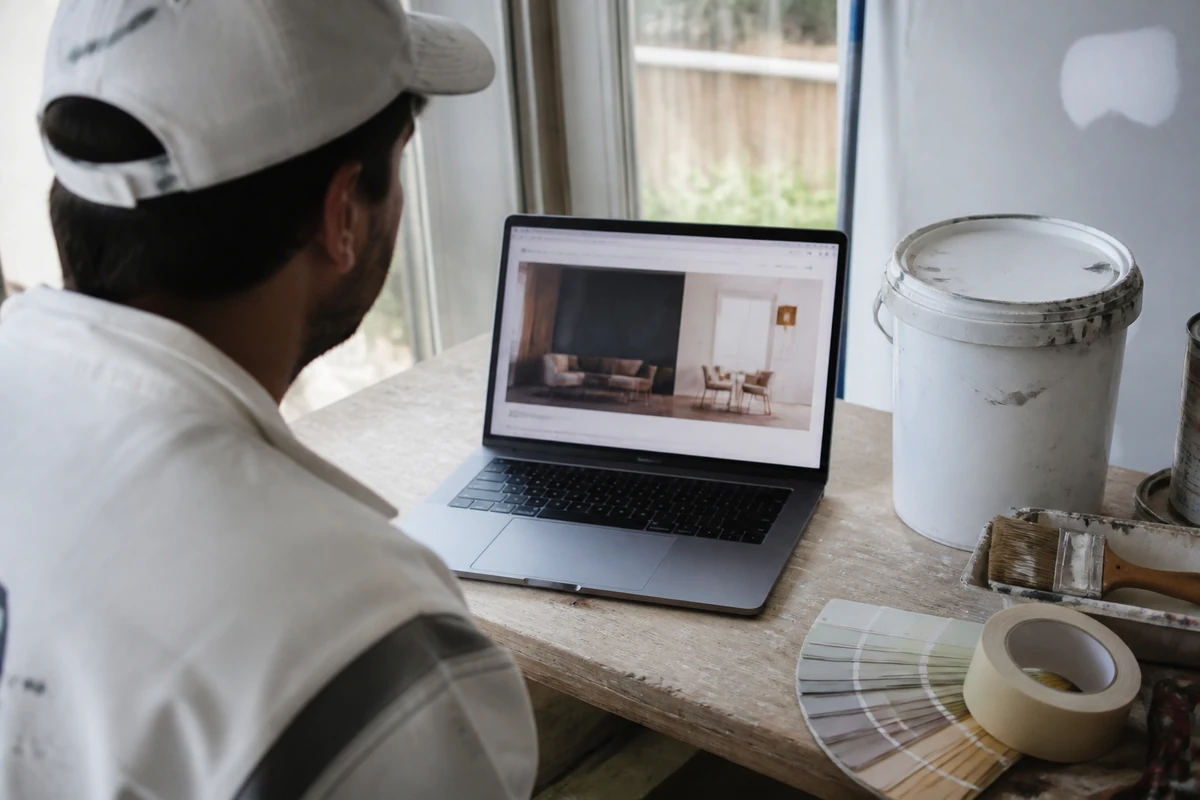
A lot of painting websites look fine at first glance. Clean logo. Nice colours. A contact page. Maybe even a few project shots.
But looking fine is not the same as bringing in enquiries.
If your site gets traffic but not enough quote requests, there is usually a reason. In many cases, it is not your workmanship. It is not your pricing. It is not even your market.
It is the website.
Small mistakes create friction. Friction kills action. And when someone is comparing three or four painters at once, the business with the clearest and easiest website often gets the call.
Here are the website mistakes that quietly cost painters new enquiries, plus what to fix.
Weak calls to action
Many painters make people work too hard to contact them.
The site says things like Get in touch or Learn more. That is vague. It does not tell the visitor what happens next. It does not create urgency. It does not help someone who is ready to ask for a price.
Your call to action should match buyer intent.
- Request a quote
- Book a site visit
- Call for a painting estimate
- Send your plans for pricing
- Ask about availability
Those are clearer. They feel practical. They move the visitor toward the next step.
Weak calls to action also show up in placement. Some painter websites have one contact button in the menu and nothing else. If someone lands halfway down a service page on mobile, they should not need to hunt for a way to enquire.
What to fix:
- Use one main action across the site
- Repeat it in the header, hero, service pages and near the end of each page
- Make buttons specific, not generic
- Show a phone number clearly for people who want to call now
Thin service pages that say almost nothing
If your interior painting, exterior painting or commercial painting pages are only a few lines long, they will struggle to convince anyone.
Thin pages create two problems.
First, they do not help potential clients understand what you actually do. Second, they give search engines very little context about your services, locations and job types.
A proper service page should answer the questions a buyer already has.
- What type of work do you do?
- Who is it for?
- What areas do you cover?
- What is included?
- What kinds of properties do you paint?
- What happens when someone requests a quote?
For example, an exterior house painting page should not just say you offer exterior painting. It should mention common surfaces, prep work, repaint projects, weather exposure, access issues and who the service suits.
Short pages often force everything onto the homepage. That makes the site feel broad and generic. Better service pages make the business feel more relevant and more trustworthy.
If you want a clearer picture of how service pages support website SEO for painters, start there, then build each page around a real service your business wants more of.
Missing project photos or poor project proof
Painting is visual. Your website should prove that.
Yet many painter websites rely on stock photos, low-quality phone shots or no project images at all. That is a missed opportunity.
People want evidence. They want to see finishes, colour changes, detail work and the type of properties you work on. Before and after images are especially useful because they make the result obvious fast.
Project proof also helps reduce uncertainty. A homeowner wants to know you can handle occupied homes, weathered exteriors, timber trims or full repaints. A commercial client wants to know you can handle offices, strata, retail or larger scopes professionally.
What strong project proof looks like:
- Real photos from completed jobs
- Before and after examples
- Short captions with service type and suburb
- A brief summary of the challenge and result
- Different examples for residential and commercial work if you do both
You do not need to write a giant case study for every job. Even a tight project section can work. For example, one gallery item might say: exterior repaint, weatherboard home, Brighton, full prep and finish, colour update completed over five days.
That is enough to add context and credibility.
Unclear service areas
This one costs painters a lot of leads.
If your website does not clearly explain where you work, people may leave. They do not want to fill in a form only to find out you do not service their suburb.
Google also needs location clues across the site. Not just on the contact page. Not buried in the footer.
Some businesses go too broad and simply say they service Melbourne or Sydney. Others go too narrow and never mention surrounding suburbs. Neither approach is ideal.
You need to show your true service area in a way that is useful for buyers.
- List key suburbs or regions on relevant pages
- Mention local areas naturally in project examples
- Explain whether you work across inner, outer or regional areas
- Keep suburb coverage realistic
If this is a weak spot on your site, read Local Search for Painters: Suburbs, Maps and Near Me Searches. It breaks down how location signals affect what happens next.
A simple rule helps here. If a visitor from a target suburb lands on your site, they should know within seconds that you service their area.
Poor mobile layout
Most painter enquiries do not come from someone sitting at a desk doing deep research. They come from people on their phone. They might be on-site. They might be at home after work. They might be comparing quotes while standing in the driveway.
If your mobile layout is clunky, hard to read or slow to use, you lose those leads.
Common mobile problems include:
- Tiny text
- Buttons too close together
- Huge image banners that push the real content down
- Phone numbers that are not tap-to-call
- Forms that are painful to fill in
- Walls of text with no spacing
A painter website should be easy to scan on a small screen. The visitor should quickly find:
- What you do
- Where you work
- Why they should trust you
- How to request a quote
Test your site like a customer. Open it on your own phone. Try requesting a quote one-handed. If it feels annoying, that is your answer.
Vague pricing wording
Painters often avoid pricing completely because every job is different. That is fair. But many websites go too far and become evasive.
When a site says nothing about pricing, some people assume the business will be expensive. Others assume they will waste time just to get a rough idea.
You do not need to publish a fixed price list for every painting job. You do need to set expectations.
Better wording sounds like this:
- Quotes are based on surface condition, access, prep requirements and paint selection
- We can provide site visit quotes for larger projects
- Plans can be reviewed for some commercial jobs
- We will explain what is included before work starts
This gives clarity without boxing you into unrealistic numbers.
You can also explain your process. For example, say whether quotes are given after an inspection, after photos are reviewed or after plans are sent through. Clear process builds confidence.
Bad pricing language creates suspicion. Clear pricing language creates trust.
Missing trust signals
If your site asks for an enquiry before showing proof, you are asking too much too early.
Trust signals matter because painting is a considered purchase. People are inviting you into their home, handing over access to a commercial site or spending serious money on appearance and maintenance.
Your website should answer the unspoken question: Why should I trust this business?
Strong trust signals include:
- Real reviews
- Licensing or trade credentials where relevant
- Insurance mention
- Years in business if accurate
- Named service areas
- Team photos
- Project photos
- Clear business details
- Supplier or product familiarity where relevant
Even small touches help. A proper about page. A real business address or service area note. A visible ABN if appropriate. A genuine testimonial with a first name and suburb. These details make the business feel real.
Many painters also forget to match trust signals to the type of work they want. If you want more commercial jobs, show commercial proof. If you want more premium residential work, show tidy, polished residential examples.
And if trust is the main thing your site is lacking, the next step is not more design. It is more proof. This is exactly why How Painters Can Build Trust Before Someone Requests a Quote matters so much.
Confusing quote request forms
Forms should help enquiries happen. Too often they do the opposite.
Some painter websites ask for too much. Full address, service type, timeframe, budget, how they found you, multiple dropdowns, upload fields, long message boxes. On desktop that is annoying. On mobile it is worse.
Other sites ask for too little. Just a blank message field and no structure. That can lead to weak enquiries with missing details.
The best form is simple but useful.
- Name
- Phone
- Suburb
- Type of job
- Short message
That is enough for most painter leads.
If you want more detail, collect it later. Or make extra fields optional, such as photo upload or preferred inspection time.
Also make sure the form explains what happens next. People are more likely to submit when they know the process.
For example:
- We will review your enquiry and get back to you within one business day
- If needed, we will arrange a site visit to prepare your quote
- You can also call us now for urgent work
That removes doubt.
No separation between residential and commercial services
This is another common conversion problem.
If your site tries to speak to everyone on the same page, it often connects with no one. Residential clients and commercial clients care about different things.
Homeowners usually want reassurance, workmanship, tidiness, timing and help choosing finishes. Commercial buyers are more likely to care about scope, access, compliance, scheduling and dealing with site constraints.
If both audiences land on the same generic page, the message becomes muddy.
What to fix:
- Create separate service sections or pages for residential and commercial work
- Use project examples that match each audience
- Adjust calls to action to suit the buyer
- Mention the practical details each type of client expects
You can still keep the site simple. Just do not force very different buyers through the same generic pitch.
Generic homepage copy that says what every painter says
Quality workmanship. Great service. Competitive pricing. Reliable team.
Every painter says this.
Generic claims do not create enquiries because they do not help a buyer compare options. Your homepage should quickly answer three things.
- What do you actually specialise in?
- Who do you work with?
- What areas do you service?
For example, a stronger opening might talk about residential repaints in specific suburbs, or commercial painting for offices and retail spaces across a region. That feels more concrete. More relevant. More believable.
The more specific your message, the easier it is for the right visitor to think, this is the company for my job.
No clear next step after interest is created
Some websites do a decent job of creating interest, then fail right at the finish line.
The visitor has seen your work. They like the site. They are open to contacting you. But what now?
If the next step is unclear, delayed or hidden, you lose momentum.
Do they call? Fill in a form? Upload plans? Wait for a callback? Book an inspection?
Tell them.
Every key page should make the next step obvious. And the process should feel easy.
- Request your quote
- Send through photos
- We review the job
- We arrange a site visit if needed
- You receive your quote
That simple sequence can lift enquiry rate because it removes uncertainty.
What painters should fix first
You do not need to rebuild the whole site tomorrow.
Start with the problems closest to lost revenue.
-
Strengthen your main calls to action
-
Make the mobile experience easier
-
Improve service pages for your core job types
-
Add real project photos and short project descriptions
-
Clarify service areas across the site
-
Simplify your quote form
-
Add stronger trust signals near enquiry points
Those fixes do not just make the site nicer. They make it easier for the right customer to say yes to the next step.
Final word
A painting website should do more than exist. It should help turn interest into enquiries.
If your site is missing clear actions, useful service pages, real proof, suburb clarity, mobile usability and a simple quote path, you are likely losing jobs to painters with a better setup.
Fix the friction. Make the next step obvious. Then let the site do more of the selling for you.
If you want help finding what is costing your painting business leads, start by reviewing your site like a customer and fixing the pages that should be driving quotes first.